How Does Interest Accrue on Student Loans?
Student loans can help students pay for college, university, and other educational expenses, but borrowing money comes with an important responsibility: understanding interest. Interest is the cost of borrowing money, and it can increase the total amount you repay over time. Even if you make regular monthly payments, interest can affect how quickly your loan balance decreases.
Understanding how interest accrues on student loans can help you make better financial decisions, choose a suitable repayment strategy, and avoid paying more than necessary. Whether you have federal student loans or private student loans in the United States, knowing how interest works is an important step toward managing your debt.
In this article, we will explain how student loan interest accrues, what affects the amount you pay, how unpaid interest can increase your balance, and what you can do to manage borrowing costs.
1. What Does It Mean for Student Loan Interest to Accrue?
When interest accrues, it means interest accumulates on the money you borrowed over time.
For example, imagine you borrow $10,000 for college at an annual interest rate of 5%. If the loan accrues interest for a full year and you make no payments, approximately $500 in interest could accumulate, assuming a simple daily-interest calculation and no changes to the balance or interest rate.
This means you could owe $10,500 after one year if the interest remains unpaid and no other adjustments apply.
However, the exact amount depends on the loan’s interest rate, how interest is calculated, when the loan was disbursed, and whether you make payments.
Interest can begin accruing while you are still attending school. Depending on your loan type, you might not be required to make payments during that period, but that does not necessarily mean interest stops accumulating.
Understanding when interest begins is essential because unpaid interest can make your education more expensive over time.
2. When Does Interest Start Accruing on Student Loans?
The date interest begins accumulating depends on the type of student loan you have.
For many federal student loans in the United States, interest begins accruing when the loan funds are disbursed. This means interest may accumulate while you are attending school, even if you are not yet required to make monthly payments.
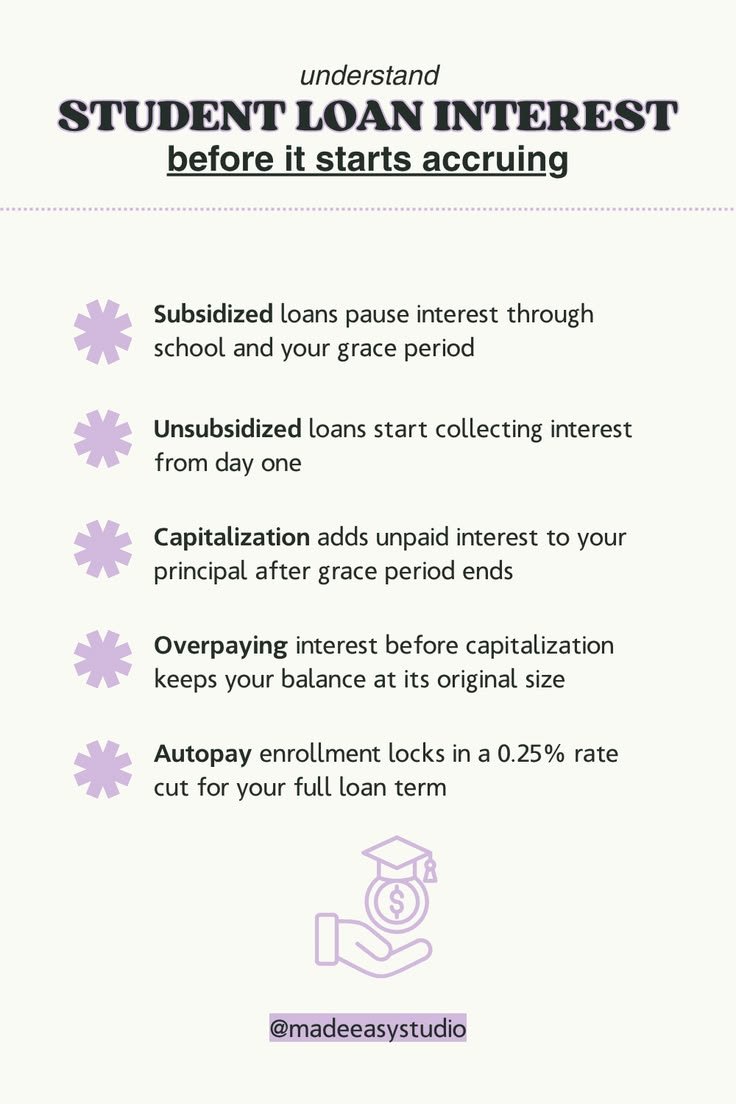
Federal Direct Subsidized Loans are different because the federal government generally pays the interest during eligible periods, including qualifying periods of at least half-time enrollment. Certain conditions and exceptions apply.
Federal Direct Unsubsidized Loans generally begin accruing interest after disbursement, including while you are in school and during applicable grace or deferment periods.
Private student loans have their own terms. Some lenders begin charging interest as soon as the funds are disbursed, while others may offer repayment arrangements that allow students to defer payments until after graduation.
Before borrowing, review your loan agreement to understand when interest begins and whether you will be responsible for paying it while you are in school.
3. How Is Student Loan Interest Calculated?
Many student loans calculate interest daily. Under a common daily-interest method, the lender uses your outstanding principal balance, annual interest rate, and the number of days in the period.
A simplified formula is:
Daily interest = Outstanding principal × Annual interest rate ÷ 365
Let’s use an example.
Suppose you have:
- Loan balance: $10,000
- Annual interest rate: 5%
- Calculation period: 365 days
Your estimated daily interest would be:
$10,000 × 0.05 ÷ 365 = approximately $1.37 per day.
Over 30 days, that would amount to approximately $41.10 in interest if the principal balance remained unchanged.
Over a full year, the interest would be approximately $500 if the balance stayed at $10,000 and the rate remained at 5%.
In reality, your balance may change as you make payments or if unpaid interest is added to the principal. As a result, your actual interest charges may differ from this simplified example.
Knowing how interest is calculated can help you estimate your borrowing costs and understand why your loan balance may increase even when you are not making payments.
4. What Is the Difference Between Fixed and Variable Interest Rates?
The interest rate attached to your student loan affects how much interest accrues over time.
Student loans generally have either fixed or variable interest rates.
Fixed interest rates remain the same throughout the applicable loan term. If you borrow $15,000 at a fixed rate of 5%, the interest rate generally will not change during repayment.
This makes it easier to estimate your future payments and plan your budget.
Variable interest rates can change over time, depending on the loan agreement and the benchmark or index used by the lender. If the rate increases, more interest may accrue. If it decreases, your interest costs may fall.
Variable-rate loans can make budgeting less predictable because your borrowing costs may change.
Federal student loans generally have fixed interest rates established for each loan. Private student loans may offer fixed or variable rates.
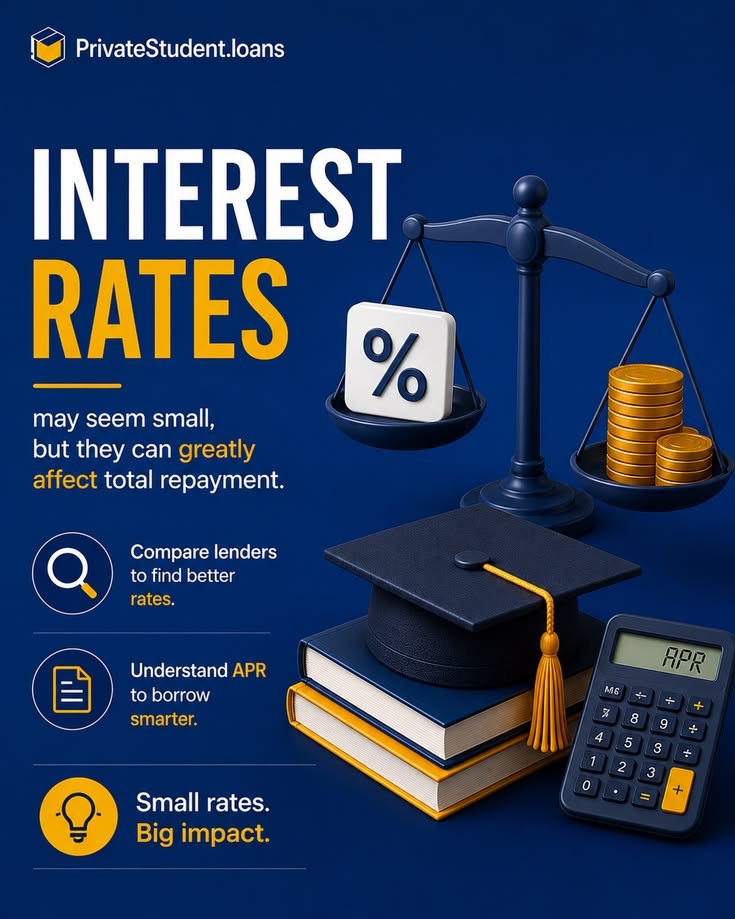
When comparing student loans, consider more than the advertised interest rate. Look at repayment terms, fees, available protections, and whether the rate can change.
5. Can Unpaid Interest Increase Your Student Loan Balance?
Yes. Unpaid interest can increase your total student loan balance under certain circumstances.
However, it is important to understand the difference between accrued interest and capitalized interest.
Accrued interest is interest that has accumulated but has not yet been paid.
Capitalized interest occurs when eligible unpaid interest is added to the loan’s principal balance. Once that happens, future interest may be calculated on the increased principal.
For example, suppose you borrow $10,000 and accumulate $600 in unpaid interest. If that interest is capitalized, your principal balance could increase to $10,600.
If interest continues to accrue on the higher balance, you may pay more over the life of the loan.
Capitalization rules vary by loan type and circumstances. Federal student loan rules have changed over time, so borrowers should check the current rules that apply to their loans. Private lenders may have different capitalization terms.
The important point is that unpaid interest does not always become part of your principal immediately. Understanding when capitalization can occur helps you avoid surprises.
6. Does Interest Accrue While You Are in School?
For many student loans, yes.
Students sometimes assume that interest begins only after graduation, but this is not always true.
Federal Direct Unsubsidized Loans generally accrue interest while the student is enrolled in school. Private student loans may also accrue interest during enrollment, even when the borrower is not required to make immediate payments.
Federal Direct Subsidized Loans generally receive an interest benefit during eligible periods of at least half-time enrollment.
Consider a student who borrows $12,000 through an unsubsidized loan with a 5% annual interest rate. If the full amount remains outstanding for one year, approximately $600 in interest could accrue under a simplified calculation.
If the student remains in school for several years without paying interest, the accumulated amount could become substantial.
The actual result depends on the loan’s disbursement schedule, interest rate, and repayment activity.
Students should check their loan details early rather than waiting until graduation. Knowing whether interest is accumulating can help them prepare financially.
7. How Can You Reduce the Amount of Interest You Pay?
Although interest is part of borrowing, you may be able to reduce your total cost through careful planning.
Here are several strategies to consider.
Make Interest Payments While You Are in School
If your loan accrues interest while you are studying, paying some or all of that interest can help prevent it from accumulating.
You may not be required to make these payments, depending on your loan agreement. However, even small payments can help manage your debt.
For example, paying $25 per month toward accrued interest may help reduce the amount left unpaid, although the impact depends on how much interest your loan generates.
Pay More Than the Minimum
Once repayment begins, consider paying more than the required monthly amount if your budget allows.
Extra payments can reduce the outstanding principal more quickly, which may lower the interest that accrues in the future.
Check your loan servicer’s payment-allocation rules to make sure additional money is applied as intended.
Avoid Unnecessary Borrowing
Borrowing only what you need can reduce the amount of interest you accumulate.
Before accepting a student loan, estimate your education expenses and consider other available resources, such as scholarships, grants, savings, or eligible work opportunities.
Remember that borrowing less generally means repaying less principal and paying less interest over time.
Understand Your Repayment Options
Federal student loans may offer different repayment plans and protections depending on eligibility and current program rules.
Choosing a repayment plan that fits your financial situation can help you stay current on payments and manage your overall debt.
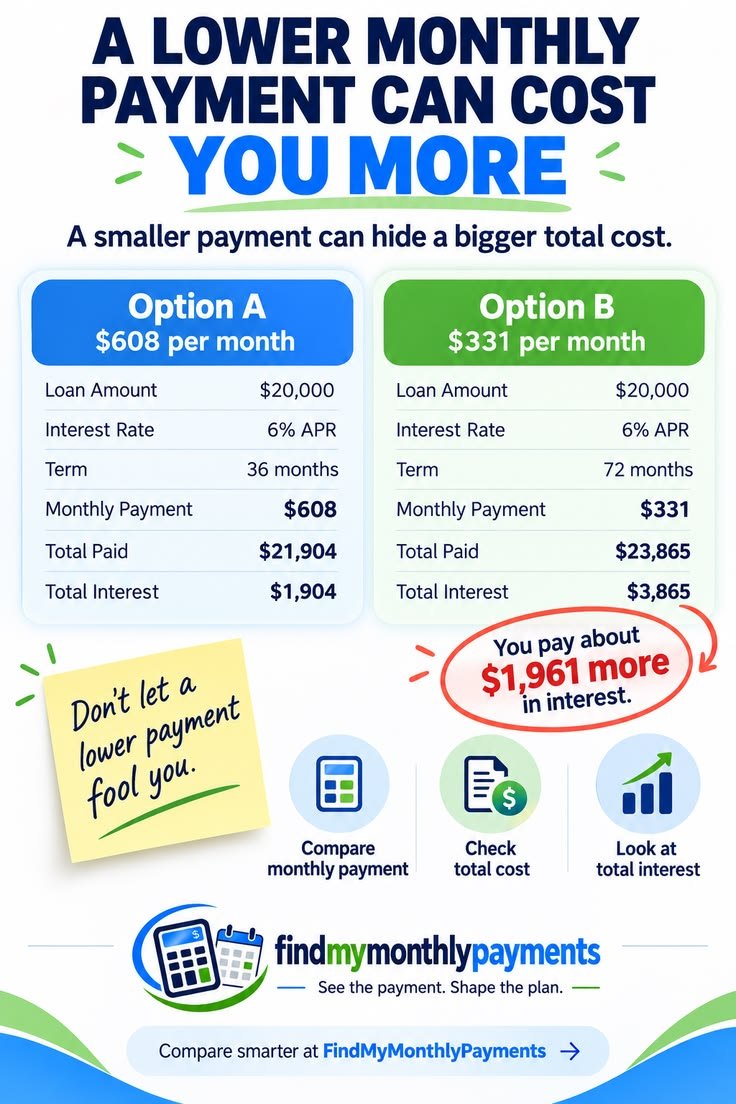
However, a lower monthly payment does not automatically mean lower total interest costs. A longer repayment period may result in more interest paid over time.
Review the long-term cost as well as the monthly payment before choosing a plan.
8. How Can You Track the Interest Accruing on Your Loans?
Keeping track of your student loan balance can help you understand how much you owe and whether your repayment strategy is working.
For federal student loans, you can use the official Federal Student Aid website to review eligible loan information and access relevant account details. Your loan servicer can provide information about your current balance, interest rate, payment history, and accrued interest.
For private student loans, check your lender’s website or contact its customer service team.
When reviewing your account, pay attention to:
- Your outstanding principal balance.
- Your current interest rate.
- The amount of accrued but unpaid interest.
- Your monthly payment and due date.
- Whether unpaid interest may be capitalized.
- How additional payments are applied.
You can also use a student loan calculator to estimate monthly payments, repayment timelines, and potential interest costs.
Although a calculator provides estimates rather than guaranteed figures, it can help you compare repayment strategies and make more informed decisions.
Frequently Asked Questions
Does student loan interest accrue every day?
Many student loans calculate interest daily using the outstanding principal balance and annual interest rate. However, the precise calculation method depends on your loan agreement.
Do student loans accrue interest during the grace period?
It depends on the loan type. Unsubsidized federal student loans generally continue accruing interest during the grace period, while eligible Subsidized Loans receive an interest benefit during the applicable grace period. Private loan terms vary.
Does paying interest while in school make a difference?
Yes. Paying accrued interest while you are in school can reduce the amount of unpaid interest that remains when repayment begins. It may also help prevent eligible unpaid interest from being capitalized later.
Can student loan interest exceed the amount borrowed?
The total interest paid over a long repayment period can exceed the original amount borrowed, depending on the interest rate, repayment term, and payment history. This is one reason to understand the full cost of a loan before borrowing.
Is student loan interest tax-deductible?
Eligible U.S. taxpayers may be able to deduct qualified student loan interest, subject to applicable income limits and other requirements. Tax rules can change, so review current IRS guidance or consult a qualified tax professional to determine whether you qualify.
Conclusion
Student loan interest accrues as the cost of borrowing money over time. Depending on your loan type, interest may begin accumulating while you are still in school, during a grace period, or while payments are deferred.
Understanding how interest is calculated, how fixed and variable rates work, and when unpaid interest may be capitalized can help you manage your debt more effectively.
You can also reduce borrowing costs by making interest payments when possible, paying extra toward your principal when your budget allows, and borrowing only what you need.
Most importantly, review your loan details regularly and contact your loan servicer if you have questions about your balance or repayment options. The better you understand how interest works, the easier it becomes to plan your finances, avoid unnecessary costs, and work toward paying off your student loans.