Should You Pay More Than the Minimum on Student Loans?

Student loans can be a significant financial responsibility, especially when you are trying to manage everyday expenses, save money, and plan for your future. For many borrowers, making the required monthly student loan payment is already a challenge. However, if you have some extra money available, you may wonder whether paying more than the minimum is a smart financial decision.
The short answer is that paying more than the minimum on student loans can help you become debt-free sooner and potentially save money on interest. However, whether this is the right choice depends on your interest rate, financial situation, loan type, and other financial goals.
For some borrowers, making additional payments is an excellent way to reduce debt. For others, building emergency savings, paying off higher-interest debt, or taking advantage of employer benefits may be a better priority.
In this article, we will explain how paying more than the minimum affects student loans, the benefits and disadvantages of making extra payments, and how you can decide whether this strategy is right for you.
What Does It Mean to Pay More Than the Minimum on Student Loans?
Your minimum student loan payment is the amount you are generally required to pay each month under your repayment agreement or current repayment plan.
The amount depends on factors such as your outstanding loan balance, interest rate, repayment term, and loan type.
For example, suppose your required monthly student loan payment is $250. If you pay $300 instead, you are paying $50 more than the minimum.
That additional money may help reduce your outstanding loan balance faster, depending on how your loan servicer applies the payment.
When you make a student loan payment, part of the money generally covers accrued interest, while the remainder reduces the principal balance. The principal is the amount you borrowed that remains unpaid.
When additional money is applied to the principal, your outstanding balance decreases more quickly. A smaller balance generally means less interest will accumulate in future periods.
However, payment allocation rules can vary. Before making extra payments, check your loan terms and ask your servicer how additional amounts will be applied.
1. Paying More Than the Minimum Can Save You Money on Interest
One of the biggest advantages of paying more than the minimum is the potential to reduce the total interest you pay over the life of your student loan.
Interest is the cost of borrowing money. Depending on your loan terms, interest may accumulate while you repay your debt.
If you make only the scheduled payments, you generally follow the repayment timeline established by your loan agreement or repayment plan.
When you make additional payments that reduce your principal, you may lower the amount on which future interest is calculated.
Consider a simplified example.
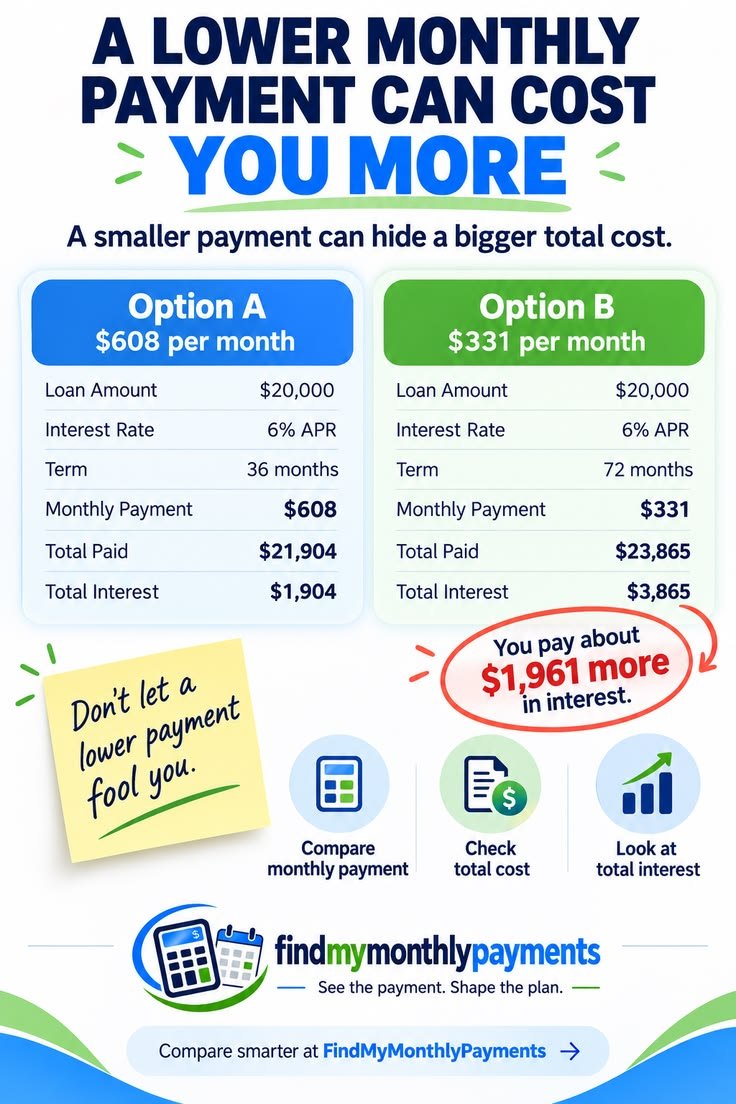
Imagine you have a student loan balance of $20,000 with a fixed annual interest rate of 6%.
If you repay the loan over a standard 10-year schedule using a fixed monthly payment, your payment would be approximately $222 per month, assuming monthly amortization and no additional fees.
Now imagine you can afford to pay more than that amount every month.
The additional money can help reduce the outstanding principal faster. As the balance falls, less interest may accumulate over time.
The exact savings depend on your actual payment amount, loan terms, interest calculation, and when additional payments are made.
This is why paying extra can be particularly beneficial for borrowers who have loans with relatively high interest rates.
2. You Could Pay Off Your Student Loans Faster
Another important benefit of paying more than the minimum is the possibility of becoming debt-free sooner.
Your scheduled monthly payment is usually designed around a particular repayment period. If you consistently pay extra and the additional money reduces your principal, you may shorten that period.
For example, suppose you have a student loan balance of $30,000 and make the required monthly payment according to a 10-year repayment schedule.
If you increase your monthly payment by $50, the extra money may help you repay the loan earlier, depending on your interest rate and repayment terms.
You can use a student loan calculator to compare your current repayment schedule with a higher monthly payment.
Enter your outstanding balance, annual interest rate, and current payment. Then calculate a second scenario using the additional amount you could comfortably afford.
The difference between the two estimates can help you understand how much sooner you might finish repaying your loan.
Keep in mind that your actual payoff date may differ from the calculator’s estimate if your interest rate, payment amount, or loan status changes.
3. Extra Payments Can Give You More Financial Freedom
Student loan debt can affect many aspects of your financial life.
When a large portion of your monthly income goes toward debt payments, you may have less money available for saving, investing, or preparing for major expenses.
Paying off your student loans earlier could eventually free up money that would otherwise go toward monthly repayments.
For example, suppose you currently pay $300 per month toward your student loans. Once the loan is completely repaid, that money could become available for other financial goals.
You might use it to build an emergency fund, contribute to a retirement account, save for a home, or invest for the future.
However, remember that making extra payments today means having less money available for other purposes in the short term.
The goal is to find a balance between reducing debt and maintaining enough financial flexibility to manage your current needs.
4. Paying Extra May Help You Feel Less Financially Stressed
Debt can create emotional pressure, particularly when repayment seems to stretch far into the future.
Knowing that you owe money for several more years may make it difficult to feel financially secure.
Making extra payments can help you see measurable progress toward eliminating your debt.
For some borrowers, watching the balance decrease faster provides motivation to continue following a budget and managing money responsibly.
You might set a specific goal, such as reducing your student loan balance by $2,000 over the next year.
You can then monitor your progress through your loan statements or a repayment calculator.
Small milestones can make a long repayment journey feel more manageable.
However, do not assume that paying off debt as quickly as possible is always the best decision. Financial security also involves maintaining savings, meeting essential expenses, and preparing for unexpected costs.
A repayment strategy should support your overall well-being rather than create additional stress.
5. When Should You Consider Paying More Than the Minimum?
Although extra payments can be beneficial, they are not equally suitable for every borrower.
Before increasing your student loan payments, consider the following situations.
You Have Emergency Savings
An emergency fund can help cover unexpected expenses, such as car repairs, medical bills, or a temporary loss of income.
Without savings, you might need to use a credit card or take out another loan when an emergency occurs.
Before committing a significant amount of money to extra student loan payments, consider building an emergency fund that reflects your expenses, income stability, and personal circumstances.
You do not necessarily need to save a large amount immediately. Even a modest financial cushion can provide some protection against unexpected costs.
You Have Paid Off High-Interest Debt
If you have credit card debt or another loan with a significantly higher interest rate than your student loans, paying off that more expensive debt may be a better financial priority.
For example, suppose your student loan has a 5% interest rate while your credit card charges 24%.
Paying extra toward the credit card may save you more interest than making additional payments on the student loan, assuming other factors are comparable.
Once the higher-interest debt is under control, you can reconsider increasing your student loan payments.
Your Income Is Stable
If you have a reliable income and your essential expenses are covered, you may have more flexibility to make additional student loan payments.
However, a stable income does not mean you should commit every extra dollar to debt.
Consider your savings goals, upcoming expenses, and other financial responsibilities before deciding how much additional money you can afford to pay.
You Have Reviewed Your Loan Benefits
Some student loan borrowers may qualify for income-driven repayment arrangements, loan forgiveness programs, or other benefits.
For eligible federal student loan borrowers in the United States, making additional payments may not always be the best strategy if they are pursuing a forgiveness program under which the remaining eligible balance could eventually be forgiven.
The financial implications depend on the specific program, eligibility requirements, repayment history, and current rules.
Before paying extra, review your repayment options and determine whether additional payments could affect your long-term strategy.
6. When Might Paying More Than the Minimum Be a Bad Idea?
Paying extra toward student loans can be helpful, but there are situations in which it may not be the best use of your money.
You Have Little or No Emergency Savings
If you use all your available cash to repay student loans, you could be left without money for an unexpected expense.
For example, imagine you have $1,000 in savings and decide to use $800 for an extra student loan payment.
Although your loan balance decreases, you now have only $200 available for emergencies.
If an unexpected expense occurs, you may need to borrow money to cover it.
Depending on the interest rate of that new borrowing, this could leave you in a worse financial position.
In this situation, building your emergency savings may be more important than making extra student loan payments.
You Are Struggling to Cover Essential Expenses
Your basic needs should come before voluntary additional debt payments.
If you are struggling to afford rent, food, utilities, transportation, or insurance, increasing your student loan payment could make your budget more difficult to manage.
Focus on meeting essential expenses and making your required debt payments.
If you cannot afford your current student loan payment, contact your loan servicer to discuss available repayment options rather than simply missing payments.
You Have Other Important Financial Goals
You may also be saving for retirement, building an emergency fund, or preparing for a major purchase.
Putting every available dollar toward student loans could delay these goals.
For example, if your employer offers a retirement contribution match, contributing enough to receive that benefit may be worth considering before making substantial extra student loan payments.
The right decision depends on your employer’s plan, loan interest rate, financial situation, and other priorities.
You do not always have to choose between debt repayment and saving. In some situations, dividing your available money between both goals may be more practical.
7. How Can You Decide How Much Extra to Pay?
If you decide that making additional student loan payments is appropriate, the next step is choosing an amount.
Start by reviewing your monthly income and expenses.
Calculate how much money remains after paying for essential living costs, minimum debt payments, and other necessary financial commitments.
Next, consider how much you need to save for emergencies and upcoming expenses.
The amount left over can help you determine whether additional student loan payments fit comfortably within your budget.
For example, suppose your monthly budget shows that you have $150 remaining after covering your expenses and financial priorities.
You might decide to put $50 toward your student loans and keep the remaining $100 for savings or other goals.
You could also make occasional extra payments when you receive additional income rather than committing to a higher payment every month.
The most important thing is to choose an amount you can maintain without regularly running short of money.
Review your budget whenever your income or expenses change.
8. Use a Student Loan Calculator to Compare Your Options
A student loan calculator can help you understand how paying more than the minimum might affect your repayment schedule.
Most basic calculators allow you to enter your loan balance, annual interest rate, and monthly payment.
Some also estimate your total interest cost and expected payoff date.
You can use these features to compare different repayment scenarios.
For example, calculate your repayment timeline using your required monthly payment. Then repeat the calculation using an additional $25, $50, or $100 per month.
Compare the estimated payoff dates and total interest costs.
This exercise can help you determine whether increasing your payments would make a meaningful difference.
You can also use a calculator to test a one-time extra payment, provided the calculator supports that feature.
Remember that the results are estimates. Your actual repayment experience may differ because of interest capitalization, variable interest rates, payment timing, fees, or changes to your repayment plan.
For the most accurate information about your loan balance and payoff amount, review your statements and contact your loan servicer.
9. Make Sure Extra Payments Are Applied Correctly
Before sending additional money to your student loan servicer, understand how the payment will be processed.
Some borrowers assume that paying extra automatically reduces the principal immediately. However, the way a payment is allocated depends on the loan terms and applicable servicing rules.
Your payment may first cover outstanding amounts due, such as accrued interest, before reducing the principal.
You should also check whether your servicer will apply extra money toward your next scheduled payment or allow you to direct it toward a particular loan.
If you have several student loans, you may want to direct additional payments toward the loan with the highest interest rate to reduce overall interest costs.
Read your servicer’s instructions and confirm that your payments are being applied as intended.
Continue making your required monthly payments unless your servicer confirms that your repayment obligations have changed.
Paying extra does not automatically mean you can skip future payments.
10. What Is the Best Strategy for Paying Off Student Loans?
There is no single repayment strategy that works for every borrower.
If your main goal is to reduce interest costs, paying extra toward your highest-interest loan may be a sensible approach.
If you need motivation, paying off the smallest balance first may help you build momentum.
If your income is limited, focusing on essential expenses, maintaining required payments, and building emergency savings may be more appropriate than aggressively repaying your loans.
If you qualify for a federal student loan forgiveness program, review its requirements before making extra payments.
Your decision should consider your interest rates, financial stability, other debts, savings, and long-term goals.
The best strategy is not necessarily the one that eliminates your student loans in the shortest possible time. It is the one that helps you manage debt responsibly while protecting your broader financial future.
Conclusion
Should you pay more than the minimum on student loans? In many situations, yes. Making additional payments can help reduce your principal balance, lower the amount of interest you pay, and shorten your repayment period.
However, extra payments are not always the highest financial priority. Before committing additional money to your loans, consider your emergency savings, other debts, essential expenses, and eligibility for repayment benefits or forgiveness programs.
If you decide to pay extra, start with an amount that fits comfortably within your budget. You can increase it later as your income grows or your expenses decrease.
Use a student loan calculator to compare different payment amounts and estimate how they could affect your payoff date. Check with your loan servicer to make sure additional payments are applied correctly.
Ultimately, paying off student loans faster is about more than eliminating debt. It is about making informed financial decisions that help you become more secure, prepare for future expenses, and work toward your long-term financial goals.