
How Do You Calculate Student Loan Payments?
Paying for college or university can be expensive, and many students rely on loans to cover tuition fees, accommodation, textbooks, and other educational expenses. Although student loans can make higher education more accessible, borrowing money also creates a financial responsibility that may continue for years after graduation.
Before taking out a student loan, it is important to understand how much you may need to repay each month. Knowing your estimated monthly payment can help you create a realistic budget, compare loan options, and avoid borrowing more money than you can comfortably afford.
Fortunately, calculating student loan payments does not have to be complicated. You can use a student loan calculator to estimate your payments or calculate them yourself using a simple mathematical formula.
In this article, we will explain how to calculate student loan payments, which factors affect your repayment amount, how interest influences the total cost of borrowing, and how you can use a student loan calculator to plan your finances effectively.
What Are Student Loan Payments?
Student loan payments are the amounts you pay to a lender to repay money borrowed for educational expenses. These payments typically include part of the original amount borrowed, known as the principal, and interest charged by the lender.
Depending on your loan agreement, you may begin making payments while you are studying or after you graduate. Some loans offer a grace period after graduation, while others may require payments during school.
The repayment rules depend on the type of loan, the lender, and the terms of your agreement.
For example, suppose you borrow $15,000 to cover your university expenses. If your loan has an interest rate of 6% and a repayment period of 10 years, your monthly payment will depend on these details.
Understanding how your monthly payment is calculated helps you see the financial commitment involved before accepting the loan.
It also allows you to estimate how much of your future income may need to go toward repaying your education debt.
1. Understand the Factors That Affect Student Loan Payments
Before calculating your student loan payments, you need to understand the main factors that determine how much you will pay each month.
The loan amount: This is the total amount of money you borrow. Generally, borrowing more money results in higher monthly payments when the interest rate and repayment period remain the same.
The interest rate: This is the percentage charged for borrowing money. A higher interest rate generally increases both your monthly payment and the total amount you repay.
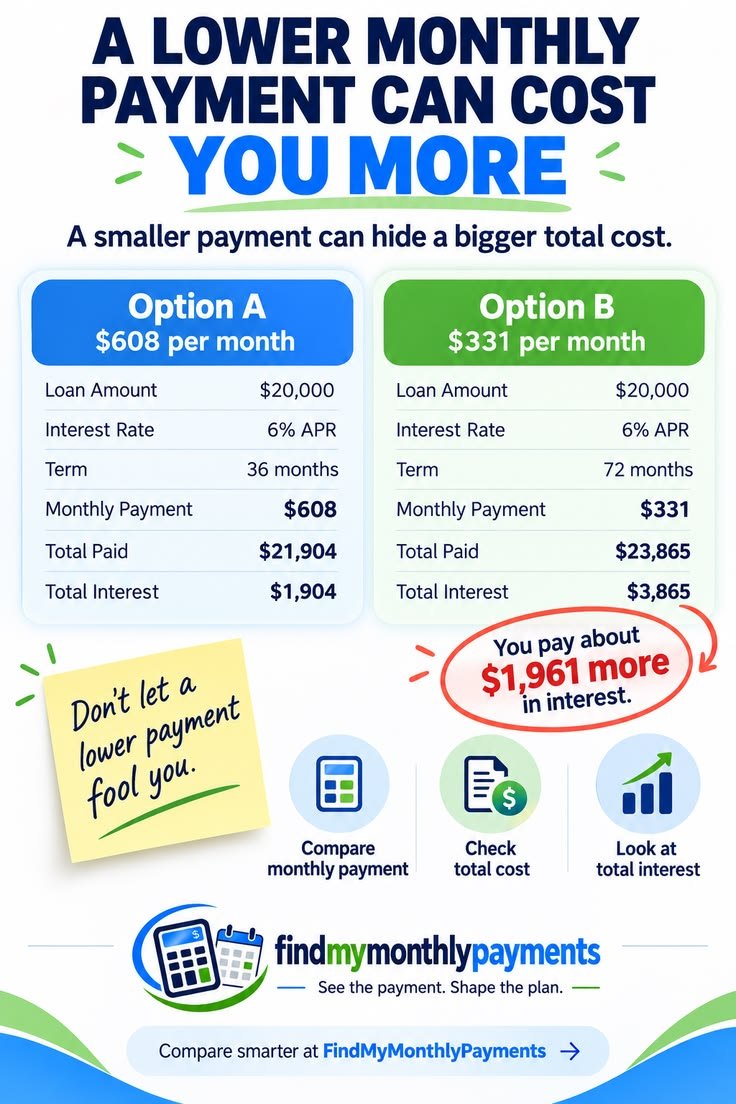
The repayment period: This is the length of time you have to repay the loan. A shorter repayment period usually means higher monthly payments but less total interest. A longer repayment period generally reduces monthly payments while increasing the total interest paid.
The repayment structure: Some loans use standard fixed monthly payments, while others offer repayment arrangements based on income or other conditions.
Additional fees: Certain loans may include origination fees or other charges that affect the overall cost of borrowing.
Understanding these factors makes it easier to estimate your payments accurately and compare different loan options before making a decision.
2. Learn the Formula for Calculating Student Loan Payments
If you want to calculate student loan payments manually, you can use a standard loan payment formula.
The formula is:
M = P × [r(1 + r)ⁿ] ÷ [(1 + r)ⁿ − 1]
Here is what each letter means:
- M represents your monthly payment.
- P represents the principal, or the amount borrowed.
- r represents the monthly interest rate.
- n represents the total number of monthly payments.
To calculate the monthly interest rate, divide the annual interest rate by 12.
For example, if your annual interest rate is 6%, your monthly interest rate would be 0.06 divided by 12, which equals 0.005.
If your repayment period is 10 years, the total number of monthly payments would be 10 multiplied by 12, giving you 120 payments.
You can enter these figures into the formula to estimate your monthly payment.
Although the formula may look complicated initially, understanding the basic information it requires makes the calculation easier. You can also use an online student loan calculator to perform the calculation automatically.
This formula works for a standard amortizing loan with regular monthly payments and a fixed interest rate. Other repayment structures may require different calculations.
3. Calculate Your Student Loan Payment With an Example
Let’s look at a practical example to understand how student loan payments are calculated.
Suppose you borrow $20,000 to pay for college. Your lender offers an annual interest rate of 6%, and you agree to repay the loan over 10 years.
Your loan details would be:
- Loan amount: $20,000
- Annual interest rate: 6%
- Monthly interest rate: 0.005
- Repayment period: 10 years
- Total monthly payments: 120
Using the standard loan payment formula, your estimated monthly payment would be approximately $222.
Over 10 years, you would make 120 monthly payments.
Your total repayment would be approximately $26,645, including about $6,645 in interest.
These figures assume a fixed interest rate, regular monthly payments, and no additional fees.
This example demonstrates why it is important to calculate your student loan payments before borrowing money. Although you receive $20,000 initially, the total amount you repay will be higher because of interest.
Knowing this information can help you decide whether the loan is affordable and whether you should explore other funding options.
4. Use a Student Loan Calculator to Estimate Your Payments
If you do not want to calculate your student loan payments manually, an online student loan calculator can make the process much easier.
These calculators allow you to enter your loan details and receive an estimated monthly payment within seconds.
Most basic calculators require three main pieces of information: the loan amount, annual interest rate, and repayment period.
To use a student loan calculator effectively, follow these steps.
Step 1: Enter your loan amount.
Enter the total amount you expect to borrow. If you need several loans, you may need to calculate each separately or use a calculator that supports multiple loans.
Step 2: Enter the interest rate.
Use the interest rate offered by your lender whenever possible. If you do not know the exact rate, you can use an estimate for planning purposes.
Step 3: Select the repayment period.
Choose the number of years you expect to take to repay the loan.
Step 4: Calculate your payment.
Click the calculator’s calculation button to see your estimated monthly payment.
Step 5: Review the total repayment amount.
Look beyond the monthly payment. Check the estimated total interest and the total amount you may repay over the entire loan period.
Step 6: Compare different scenarios.
Change the interest rate, loan amount, or repayment period to understand how different borrowing decisions affect your finances.
Using a calculator can help you make more informed decisions without spending time performing complicated calculations manually.
5. Understand How Interest Rates Affect Your Payments
Interest rates play an important role in determining how much you pay toward your student loan.
When you borrow money, the lender charges interest according to the terms of your loan. The higher the interest rate, the more expensive borrowing generally becomes.
For example, consider a $20,000 loan with a repayment period of 10 years.
At a fixed annual interest rate of 4%, your estimated monthly payment would be approximately $203.
At a fixed annual interest rate of 6%, the monthly payment would increase to approximately $222.
At a fixed annual interest rate of 8%, the monthly payment would rise to approximately $243.
These figures assume standard monthly amortization and exclude additional fees.
Although the differences may appear relatively small each month, they can add up over a 10-year repayment period.
This is why comparing interest rates is important when evaluating student loan options.
However, do not choose a loan based on its interest rate alone. Consider the repayment terms, fees, available borrower protections, and whether the interest rate is fixed or variable.
6. Understand How the Repayment Period Changes Your Monthly Payment
The repayment period also affects how much you pay every month.
Generally, extending your repayment period spreads the debt over more months, reducing the amount you need to pay each month.
However, it can also increase the total interest you pay.
For example, imagine you borrow $20,000 at a fixed annual interest rate of 6%.
If you repay the loan over five years, your estimated monthly payment would be approximately $387.
If you repay the same loan over 10 years, your estimated monthly payment would decrease to approximately $222.
If you extend the repayment period to 15 years, your estimated monthly payment would fall to approximately $169.
Although the longer repayment period makes the monthly payment smaller, you would generally pay more interest over the life of the loan.
Therefore, the best repayment period depends on your financial situation.
If your income allows you to make larger payments comfortably, a shorter repayment period may help you save on interest. If your budget is limited, a longer repayment period may offer more flexibility, depending on the loan terms.
7. Include Student Loan Payments in Your Monthly Budget
Calculating your student loan payment is only the first step. You also need to determine whether you can afford the payment alongside your other expenses.
After graduation, you may need to pay for rent, food, transportation, utilities, insurance, and other necessities.
Your student loan payment should be considered when estimating how much money you will need each month.
For example, if your estimated student loan payment is $222, include that amount in your budget alongside your expected living expenses.
Then compare your total expenses with your expected monthly income.
If your expenses are too high, consider ways to reduce unnecessary spending or explore options for lowering your borrowing costs before taking out the loan.
It is also important to remember that your first job after graduation may not provide the income you expect. Planning for a range of possible salaries can help you avoid taking on debt that becomes difficult to manage.
A realistic budget allows you to prepare for repayment while maintaining enough money for essential expenses.
8. Can You Reduce Your Student Loan Payments?
In some situations, you may be able to reduce your student loan payments or lower the total cost of borrowing.
One option is to borrow less money in the first place. Scholarships, grants, savings, and other education funding sources may reduce the amount you need to borrow.
Another option is to compare lenders and look for a loan with a lower interest rate, provided the overall terms are suitable.
You may also consider a longer repayment period if your loan agreement allows it and you need lower monthly payments. However, remember that this can increase the total interest you pay.
Some eligible borrowers may qualify for income-driven repayment plans or other repayment assistance programs, depending on the country and type of loan.
For example, certain federal student loans in the United States offer repayment options that differ from standard fixed-payment plans.
Before changing your repayment arrangements, check the eligibility requirements and possible long-term costs.
If you already have a student loan and are struggling to make payments, contact your loan servicer or lender to discuss the available options before missing payments.
Conclusion
Calculating student loan payments is an important step toward making responsible borrowing decisions and managing education expenses.
By understanding your loan amount, interest rate, and repayment period, you can estimate how much you will need to pay each month and how much the loan may cost over time.
You can calculate your payments manually using a standard loan payment formula or use an online student loan calculator to obtain estimates quickly.
Comparing different interest rates and repayment periods can also help you identify borrowing options that fit your financial circumstances.
Most importantly, remember to consider your expected income, living expenses, and other financial responsibilities before accepting a student loan.
A student loan calculator can help you understand the numbers, but careful planning is what helps you borrow responsibly and prepare for repayment. By taking the time to calculate your potential payments before borrowing, you can make better decisions about financing your education and building a stronger financial future.